SDG
15
An environment-first development organization
Every Collaborative for Change project is built on the same framework: four core Sustainable Development Goals that lead to climate action, co-benefits that lead to lasting partnerships, and women at the centre of the local economies that sustain the work.

Included in every CFC project
SDG
15
SDG
6
SDG
5
Women's economic empowerment
SDG
2
SDG · Where it all leads
13
Delivered as each project grows into a self-sustaining community system
3
4
7
8
12
SDG · Social
17
Our framework
We begin with the environment, then build the enterprises communities need, led by women and men, to fund their own social and environmental programs. We connect each project to corporate CSR programs where they exist, and commission LCPA to build the master plan that links it to municipal and national government. Then we measure what lasts, and invest in it.
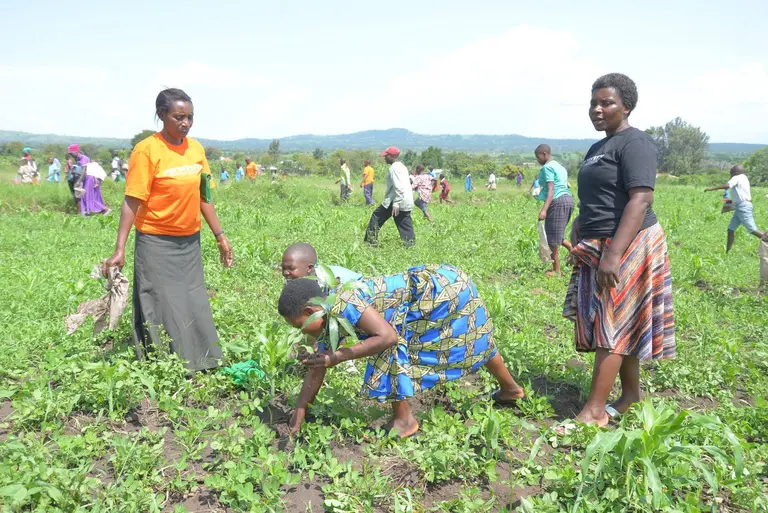
The land comes first. Communities restore indigenous forest, soil and watersheds, protect clean water, and remediate land and water damaged by mining and degradation.
SDGs 6 · 13 · 15
Restored land becomes the basis of a new local economy: food sovereignty, enterprises led by women, men and youth, and people earning from their own crops without middlemen. Income from women-led enterprises funds girls' schooling, family health and community programs.
SDGs 2 · 3 · 4 · 5 · 7 · 8 · 12
Photo: community meeting with district or LCPA partners
Where corporate CSR programs exist, CFC connects each project to them directly. For the larger framework, CFC commissions the Local Community Prosperity Alliance to build a master plan through its public-private partnership (PPP) and master planning programs, connecting projects to district, municipal and ministerial government.
SDG 17
Our governance frameworkPhoto: monitoring, e.g. measuring seedlings or water
Impact is what remains after a project is built. We are setting core indicators and baselines across our EcoCommunities, so that what we report is what has lasted: trees that survive, land and water restored, women earning, girls in school. Impact is also how we invest. CFC is developing an impact fund, based in New York, and already co-funds and helps design projects in the Philippines with Spring Rain Global.
Reported against specific SDG targets
Women's economic empowerment
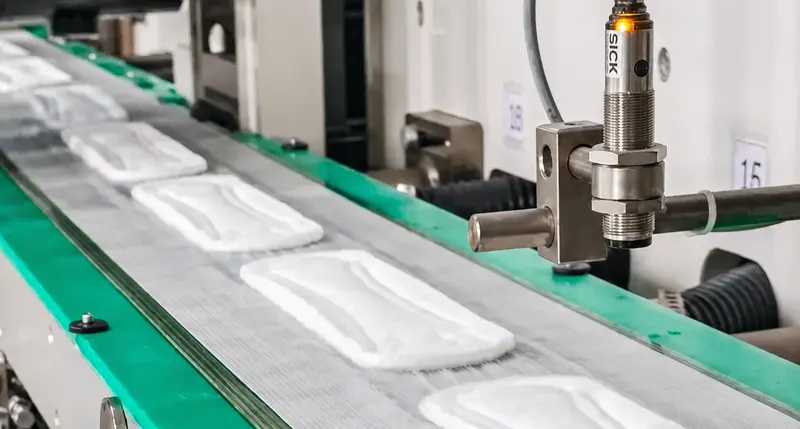
Our project managers, women and men alike, design enterprise into their projects from the start, and men lead many of the enterprises we develop together with communities. Our focus on women is why we build sanitary pad manufacturing into our projects: it is a profitable business that women run, and it keeps girls in school. Women's earnings pay for girls' schooling and family health, and help fund the next season of restoration.
Photo: a project manager with the women's group
Photo: girls at school
Businesses run by women, built into each project from the design stage.
SDG 5.5 · 8.5
Project managers of every background build women's enterprise into their communities' plans.
SDG 5.5
Menstrual health and household income keep girls learning.
SDG 4.5 · 6.2
Our vision
We see a future where communities sustain themselves: restored land that feeds people, local enterprises that fund their own social and environmental programs, and leaders with the confidence to plan beyond the next season.
Working with LCPA, communities sit at the table with district, municipal and ministerial partners, so that a local project becomes part of a regional and national plan. That is how lasting change, and self-sufficiency, reaches whole communities and whole countries.
We are not a charity. We are a development group that begins with the environment.
Our values
A clean environment is the foundation that lets people feed, educate and build livelihoods for themselves. Without healthy land and water, nothing else holds.
The communities living with environmental damage are the ones who should lead its repair. Local project managers design and own every project.
We seed systems that earn and sustain themselves, rather than aid that has to be repeated. Seed capital is a starting point, not a dependency.
Environmental, social, economic and governance needs are designed together from day one, so no part of a project depends on outside rescue.
Lasting restoration begins by working with nature rather than against it, starting from the condition of the land itself.
We report only what we can substantiate. No inflated figures, for our communities, our partners or our investors.
How projects develop
Stage 1
A project manager brings a locally rooted initiative to CFC, published in the Project Initiatives directory.
Stage 2
A six-month learning cycle grounded in ecological restoration and durable community systems.
Stage 3
CFC and the project manager build a proposal across the environmental, social and governance pillars.
Stage 4
The reviewed EcoCommunity proposal is published, ready for seed capital, and connected to LCPA's funding partner network.
Our governance partner
LCPA builds the larger framework for each seeded EcoCommunity: a master plan drawn from its public-private partnership (PPP) and master planning programs, connecting projects to municipal and national government and to its funding partner network.
Our team
Collaborative for Change began with a conviction: the communities living with environmental damage are the ones who should lead its repair.