
Project overview
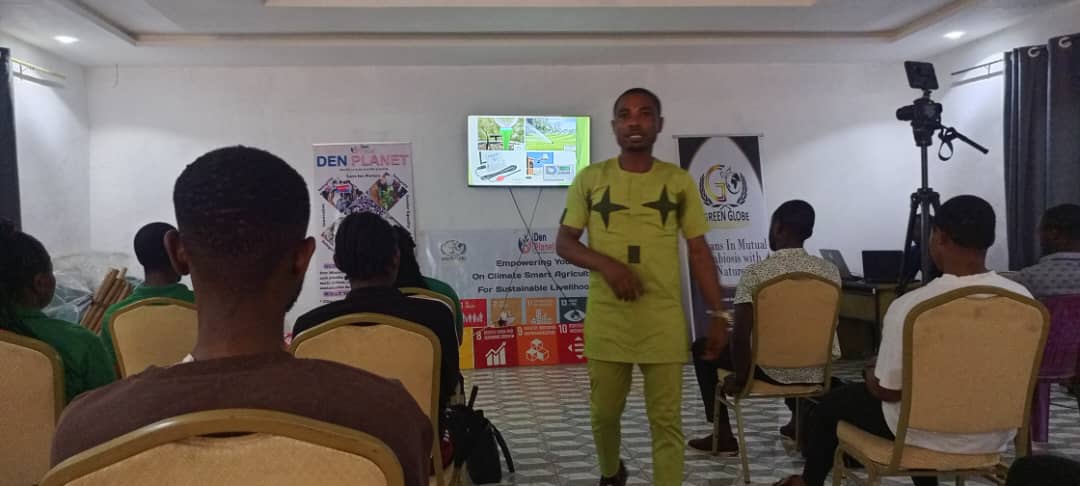
Children lead climate learning, school gardens, tree planting and watershed care, carrying new practices into their homes. Green Globe Organisation connects that restoration work with youth leadership, household food production and small enterprises.
Community context
Children as Climate Rescuers is a child-led climate education and restoration project in Nkwen, a densely populated highland community of roughly 250,000 people under the Nkwen Fondom.
Its central premise is distinctive among CFC's projects: rather than positioning adults as the restoration workforce, it equips children as the primary agents of change, trusting them to carry new environmental practices from the classroom into their households and across the wider community.
Back to sections ↑Five interconnected systems
The model runs through five interconnected systems:
- a structured climate education curriculum in participating schools;
- hands-on restoration action, tree planting, school gardens, stream clean-ups, riparian planting, and pollinator patches;
- skills and leadership training that builds children into "climate rescuers";
- school-based eco-clubs functioning as both restoration teams and safe peer-support spaces;
- and a dedicated child protection and safeguarding framework, given the project's minor-focused design.
There is no mining activity in the area, so the project's economic contribution is restorative and educational rather than remediation-driven, linking land restoration directly to household food production and youth-led enterprise.
Back to sections ↑Three connected pillars
- Socially, the project builds youth leadership and education while easing household burdens as mothers adopt composting and clean-energy practices taught by their own children, with knock-on health benefits from cleaner water catchments and reduced flooding;
- environmentally, child-led reforestation, watershed protection, soil restoration, and biodiversity work aim to rebuild both the ecosystem and the culture of stewardship that sustains it;
- economically, school gardens and nurseries boost household food production while child-led upcycling and seedball-making seed small youth and women's enterprises.
Leadership and community participation
Bekumba Adolf Metta leads the project with Green Globe Organisation, alongside local partners Xhuma Africa, Ozone Friendly People, and Den Planet, and Rural Women for Agriculture as the core community group, with community buy-in from parents, quarter heads, and women's groups identified as the project's single greatest need.
Back to sections ↑