The engine room
Learn together, then design together.
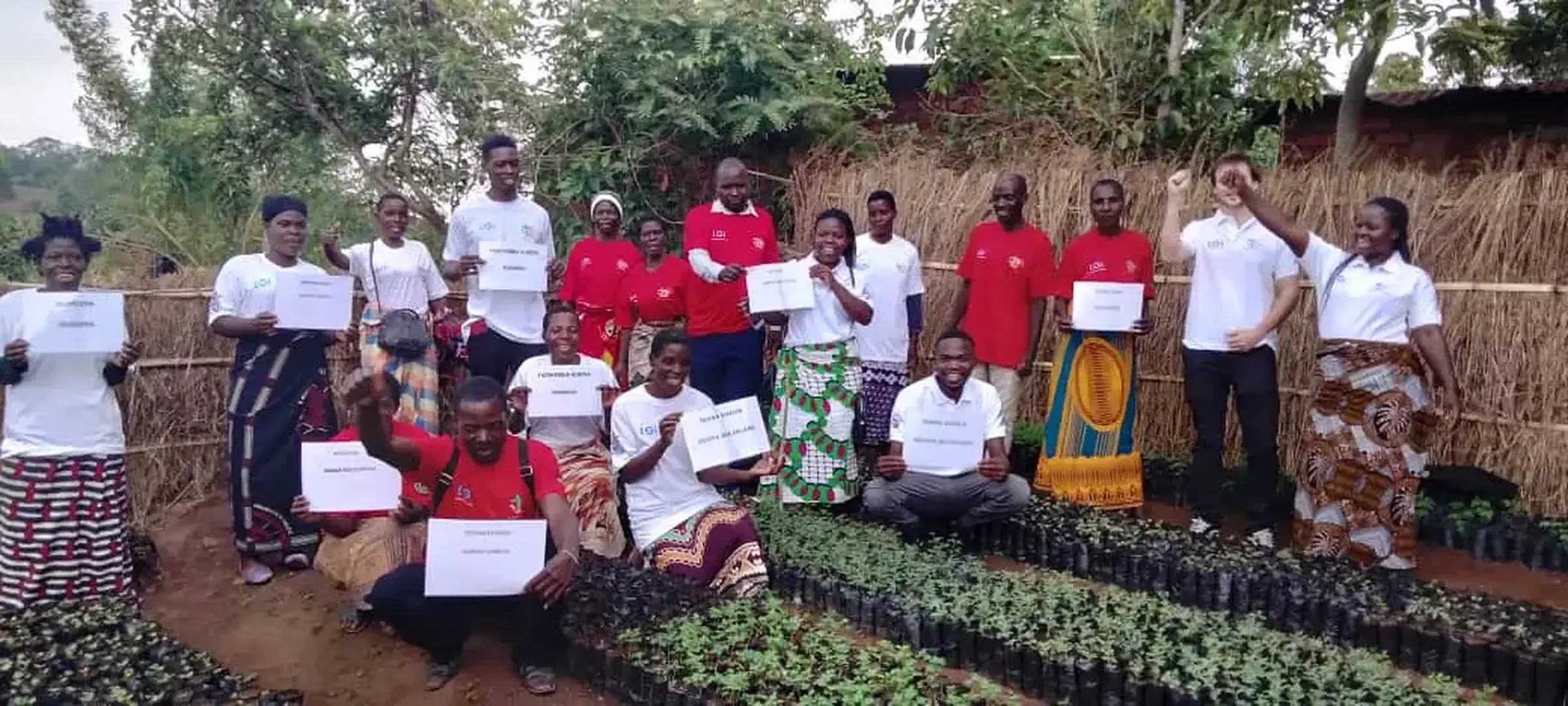
Project managers enter a six-month training cycle that builds practical understanding of ecological restoration and durable community systems.
After training, each project manager completes a guided development form. CFC uses that work to develop a full proposal, returns it for local review, and revises it collaboratively before anything is published.
The complete model
Every EcoCommunity carries three connected pillars.
Environmental
Restore the land, water, biodiversity, and food systems that make community life possible.
Social
Connect education, wellbeing, and community support to the priorities of the people who live there.
Economic
Build practical, locally led enterprise that can sustain the work and create opportunity over time.
Two starting routes
Different land conditions require a different first step.
Mining or contamination present
CFC-led remediation
Begin with water, soil, and watershed restoration so the project is not built on unsafe ground.
No mining contamination present
Regenerative agriculture
At non-mining sites, begin with farming, food forests, and seed banks so social and economic systems grow from productive land.
Both routes converge here
The project is developed across all three pillars and becomes a complete EcoCommunity proposal.
Development tools
Practical systems that make the pillars real.
CFC development tools
- Community seed banks
- Regenerative farming
- Food forests
- Women-led sanitary pad manufacturing, CFC's principal economic-pillar tool
Partner tools
- School and community education programs
- School and orphanage support programs
- Locally appropriate social systems developed with LCPA
Environmental Foundation & Training
Ecological readiness comes before infrastructure.
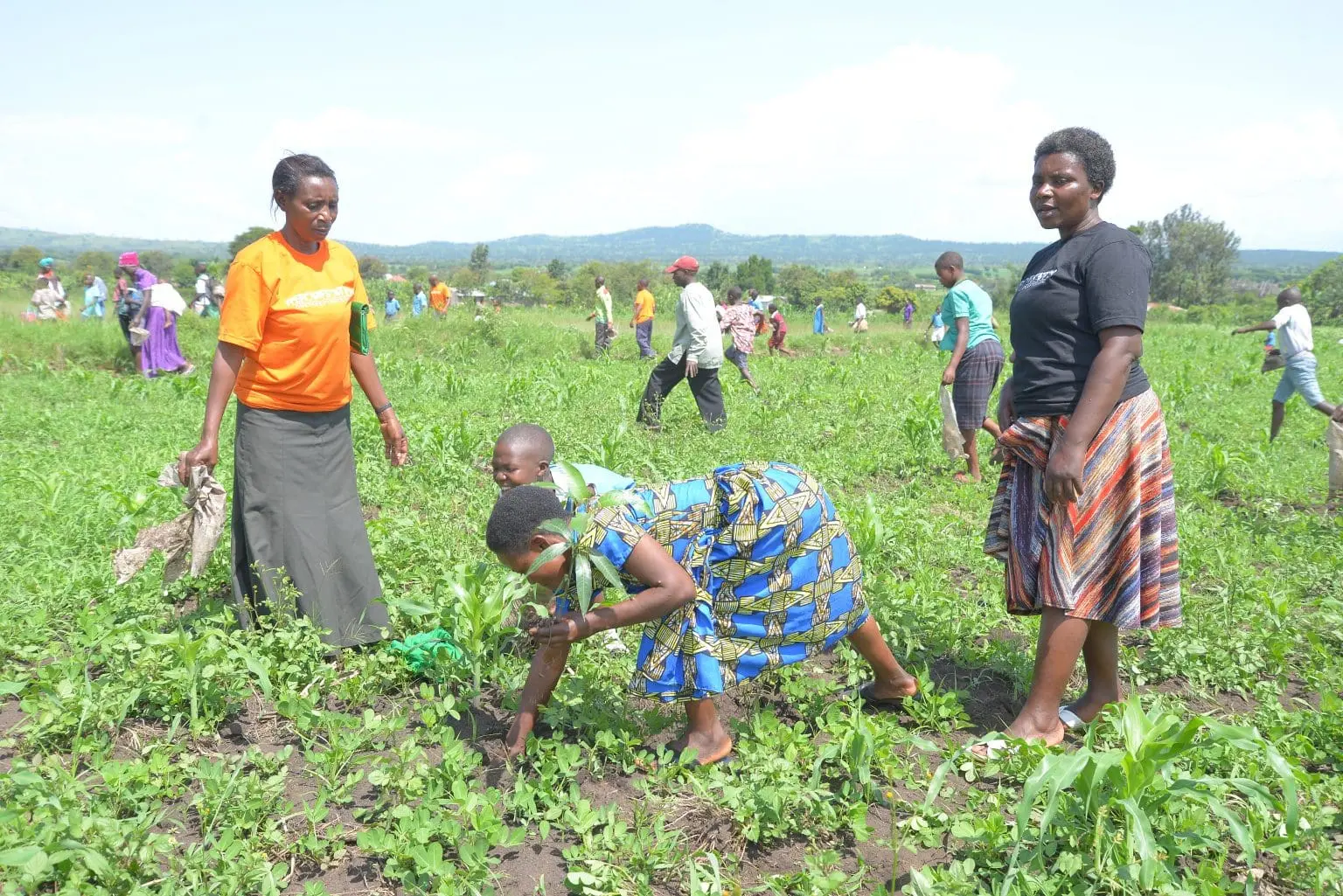
Each site begins with comprehensive land-based training and ecological preparation designed to build strong environmental foundations. Before any major infrastructure is developed, communities receive structured support to establish essential regenerative systems, including seed banks and biodiversity nurseries, regenerative food forests, soil restoration and nutrient cycling systems, agroecological training pathways, and long-term biodiversity stewardship practices.
Restoration training underpins every stage of development, ensuring ecological systems are treated not as decorative additions but as core, functional infrastructure that supports long-term sustainability and resilience.
Seedbanks & Biodiversity
Living libraries for native, climate-resilient species.
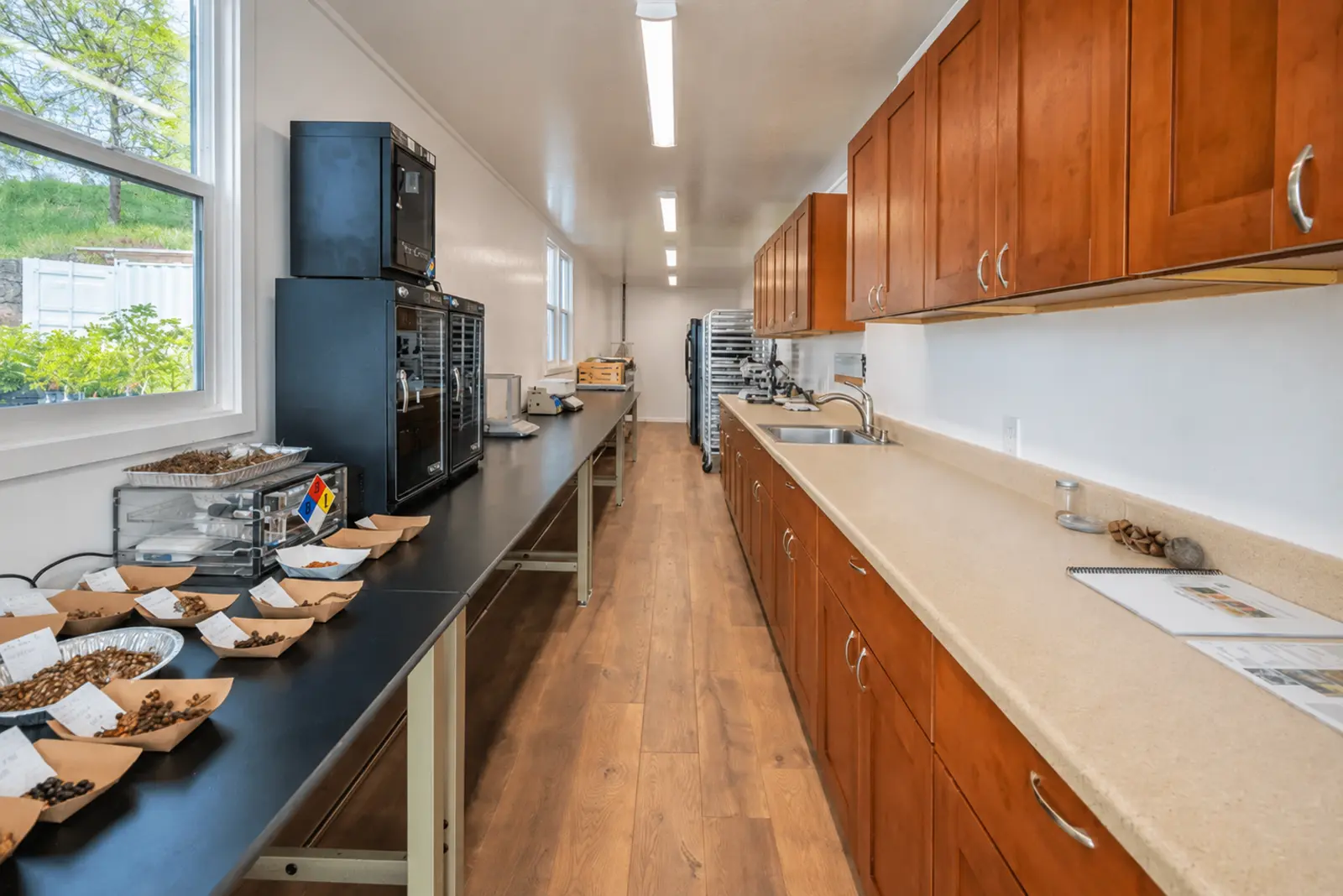
Collaborative for Change is building a network of community-based seed banks to safeguard native biodiversity and ensure a reliable supply of climate-resilient species for restoration. Seed banks serve as living libraries: protecting genetic diversity, providing training opportunities, and supplying high-quality seed for nurseries and reforestation.
Guided by Jill Wagner, a global expert in seed banking and reforestation, we are designing regional hubs that conserve native species and serve as demonstration sites where local communities learn best practices in collection, storage, and propagation.
Water Systems
Clean water first, treated without chemicals.
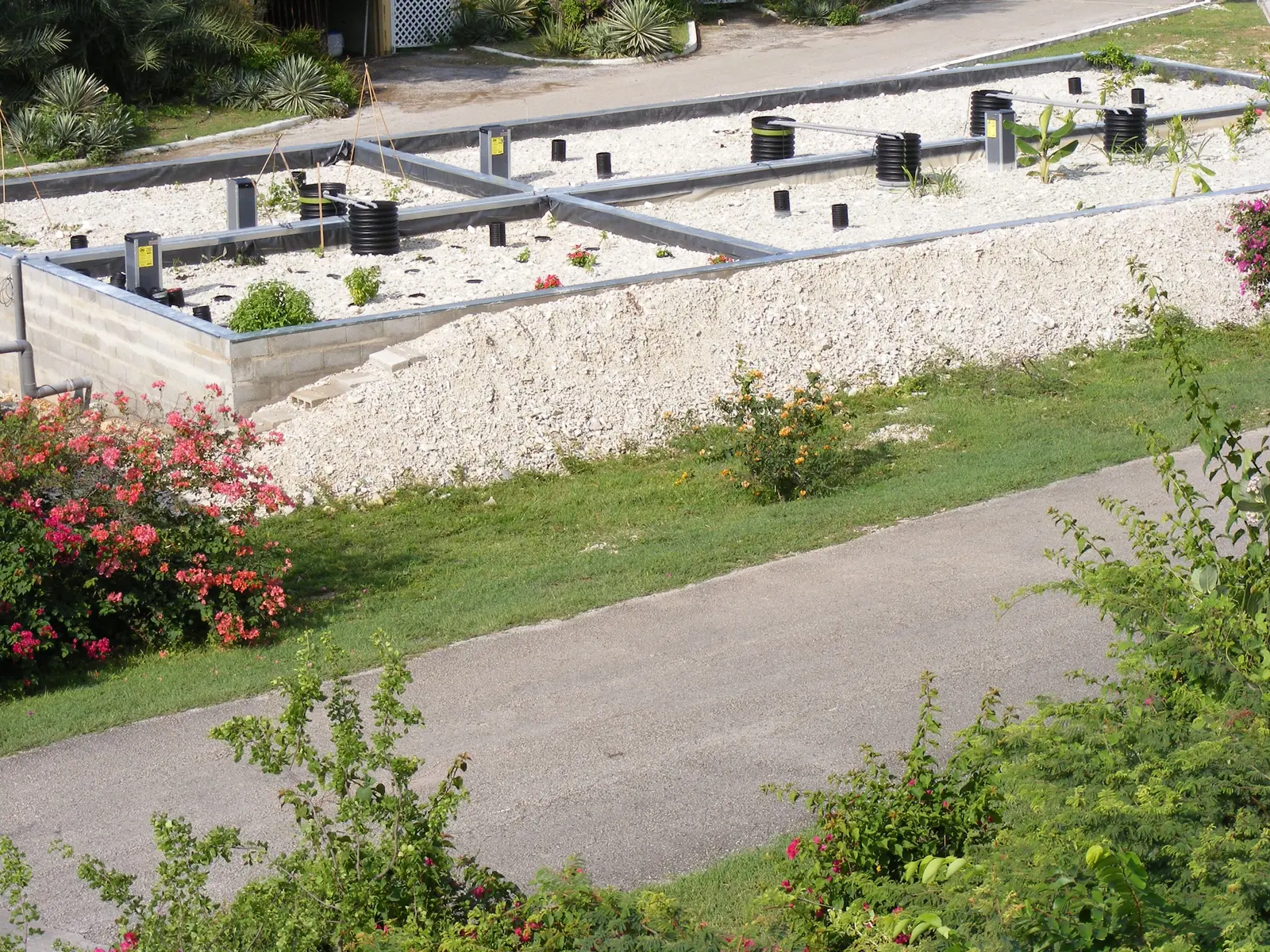
Water is often the first system a community needs restored before anything else can take root. Collaborative for Change designs passive water treatment and watershed restoration systems: reciprocating constructed wetlands, biochar filtration, and rainwater harvesting that bypass contaminated sources entirely, with no chemical dosing required.
This work is led by Dr. Leslie Behrends, who spent over thirty years at the Tennessee Valley Authority and holds the US patent on reciprocating subsurface-flow constructed wetlands. It is especially critical at mining-affected sites, where decades-old contamination can still be leaching into rivers and groundwater long after operations end.
Sanitary Pad Manufacturing
Dignity and income, made locally.
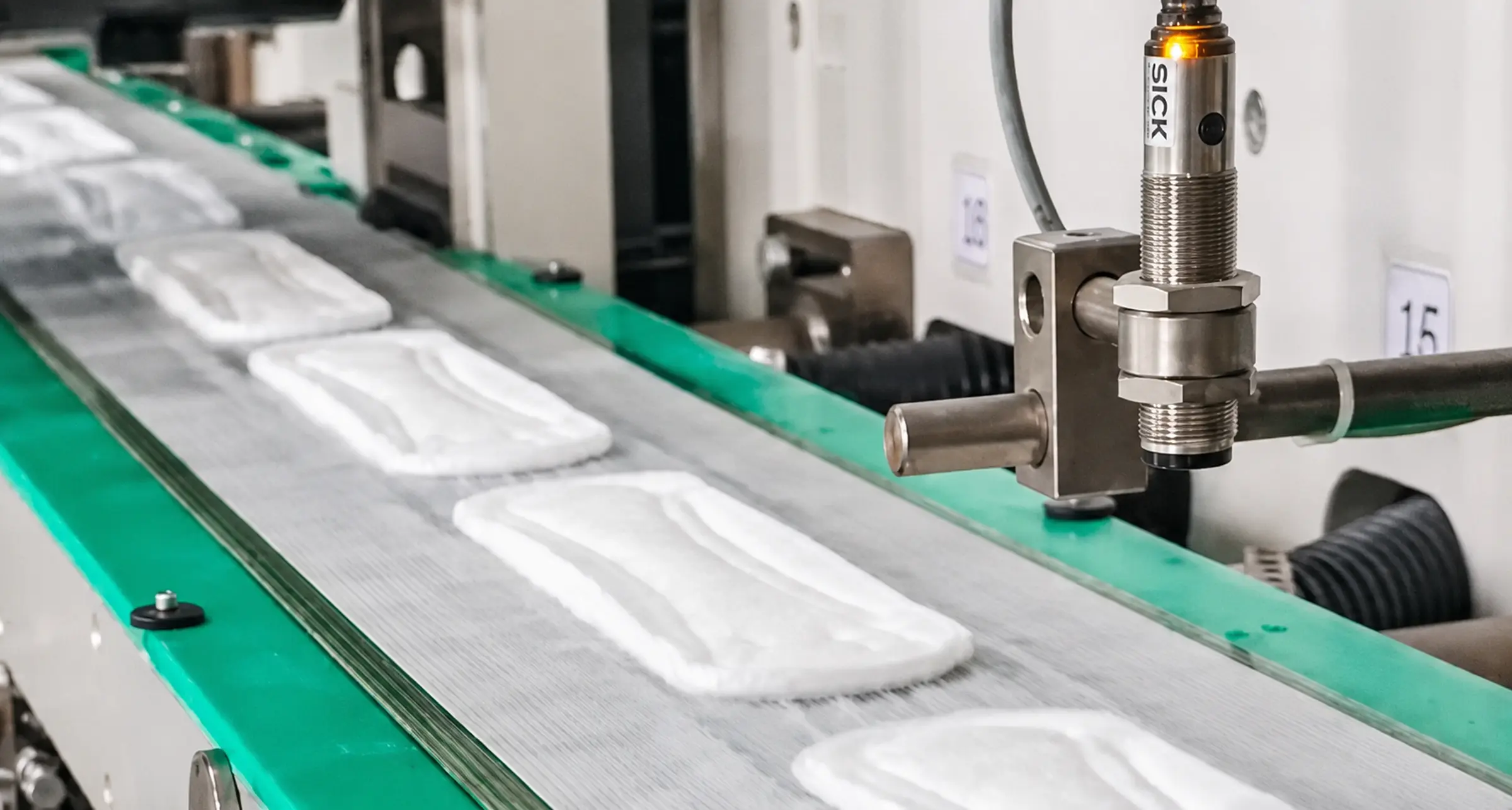
Women-led sanitary pad manufacturing is Collaborative for Change's principal economic-pillar tool. Local women produce biodegradable pads from materials already available in the community. Banana fiber and banana leaves are common across CFC's project sites, creating dignified employment and a genuine local enterprise built on what the land already provides.
Beyond income, the enterprise removes a real barrier that keeps girls out of school during menstruation, and revenue is frequently reinvested in the community's own systems, connecting the economic and social pillars directly long before any project reaches Seed.
After Stage 4
Seeded projects move into LCPA's funding network.
Once a project reaches Seed, Collaborative for Change connects it to the Local Community Prosperity Alliance Federation (LCPA), our Geneva-based financing and coordination partner. LCPA works with the seeded proposal to connect it toward investors and blended-finance structures, while CFC and the project manager continue to support delivery on the ground.
Collaborative by design
Local knowledge shapes the proposal.
CFC does not hand project managers a fixed template. The project manager brings local knowledge, culture, and priorities. CFC brings development tools, structure, and proposal support.
Together, we shape a project that can be reviewed locally, documented clearly, and prepared for public release.