
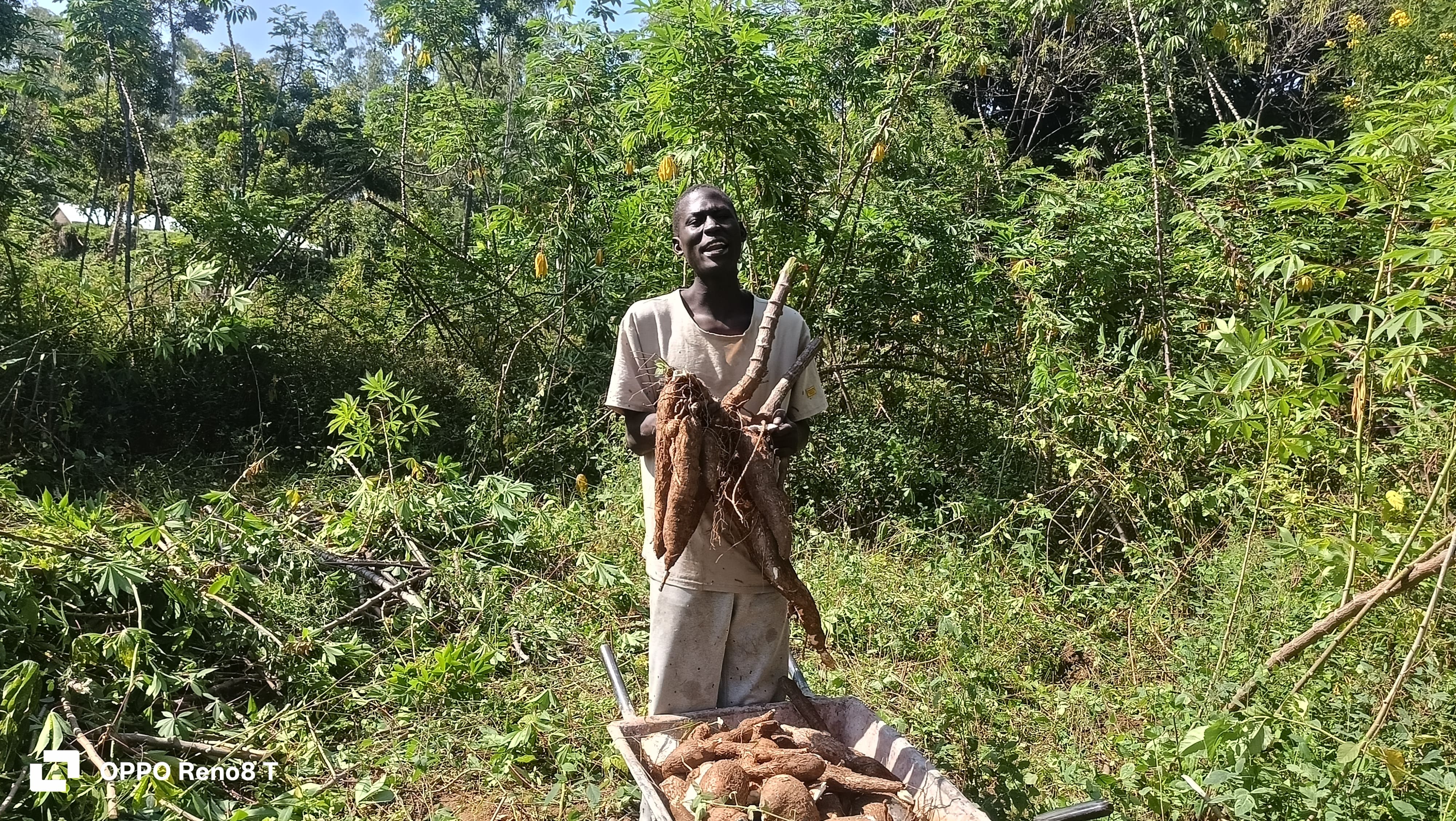
Project description
K’ombija connects inclusive schooling, family-style care, cultural learning and community health with a regenerative food forest. Nurseries, permaculture training, sanitary-pad manufacturing and food processing are designed to support the services the community shares.
Explore the community context, existing work and development plans described by the project.
More project details
- Governing Authority
- Luo Council of Elders / Area Chief
- Primary Ecosystem
- Savanna / Agricultural / Wetlands
- Land Area
- ~30 Hectares (community-owned)
- Reported daily community access
- 500+
- Reported indirect beneficiaries
- 10,000+
- Planned Land Restored (10yr)
- 5,000ha
- Training Completed
- Earth Awareness · Nursery Management
Community Context
K'ombija Community Based Project operates in the Rangwe Sub-county of Homa Bay, Nyanza Province - a region characterised by overlapping environmental and social vulnerabilities. The project's core beneficiaries are among the most marginalised: 45 orphans and children with disabilities, 30 malnourished elderly, and 20 women-led households. These groups are embedded within a wider community of 10,000+ residents across Rangwe Sub-county who will benefit from shared seed bank, training, and health services.
The community's primary priorities are food security, environmental restoration, healthcare access, and inclusive education. Artisanal sand harvesting nearby presents an ongoing environmental threat - one the project directly counters by offering a superior and more prosperous economic alternative through high-value permaculture.
Back to sections ↑Ecological Landscape
The project sits within a savanna and agricultural landscape with wetland elements, under significant environmental pressure from deforestation, soil degradation, overgrazing, biodiversity loss, and water scarcity. The project's primary ecological strategy is Successional Agroforestry - planting fast-growing pioneer indigenous species to fix nitrogen and build soil organic matter, followed by a permanent food forest canopy. Landscape hydrology through contour bunds and vetiver grass stops erosion and recharges groundwater across the local micro-watershed.
Restoration priorities: Restoring the local micro-watershed through contour bunds and vetiver grass - establishing indigenous Mother Trees to rebuild degraded fungal networks - creating an indigenous tree nursery as a regional seed bank for rare climate-resilient local species - increasing biodiversity to support pollinators and pest-predators, eliminating chemical dependency and creating a self-regulating micro-climate.
Back to sections ↑Regional Economic Context
Primary economic activities include local trade and agriculture. Known natural resources include rivers, watersheds, and fertile agricultural land. Artisanal sand harvesting nearby has caused river contamination, deforestation, and soil degradation. The K'ombija project offers a direct economic alternative through high-value permaculture - apiculture and fruit value-addition - that protects rather than depletes the land.
Back to sections ↑Core Project Systems
The K'ombija Master Plan is an integrated circular ecosystem in which every system feeds another. Seven primary pillars of resilience are woven together into a single self-sustaining community model.
Regenerative Food Forest & Indigenous Nursery
Successional agroforestry using indigenous Mother Trees to restore fungal networks and soil health. Year-round nutrition security through a permanent food forest canopy. Regional seed bank preserving rare local species resilient to climate-driven drought.
K'ombija Community School - Grades 1–9
The plan expands the existing Grade 1-3 school into an inclusive community school spanning Grades 1-9. Accessible pathways and barrier-free architecture are intended to support children with physical disabilities. The school is integrated with the farm as a living classroom in regenerative practices and food forestry.
Sports and physical development are embedded in the school program, with dedicated facilities for:
- Netball
- Football
- Tennis
The school development plan prioritises both academic excellence and the physical, creative, and vocational development of every child in the K'ombija community.
Tala Mosika - Living Museum, Residential Community & Cultural Healing
K'ombija integrates the Tala Mosika model - a holistic approach to trauma recovery, identity restoration, and community cohesion through cultural expression and belonging. At its heart is the conviction that children heal through culture, creativity, and the experience of family.
Residential Structure: A purpose-built, home-like residential environment where the 45 orphans and children with a living parent live together - creating a genuine family unit rather than an institutional setting. Children are not separated by circumstance; they are raised as a community.
Living Museum: Storytelling, visual arts, traditional dance, music, and participatory cultural media are integrated into daily life - not as programmes but as the fabric of the community. The Living Museum serves as:
- A space for trauma recovery and psychosocial healing through creative expression
- An anchor for cultural identity and dignity - connecting children to their heritage
- A community gathering space for intergenerational exchange and social cohesion
- A showcase for the broader Homa Bay region of what community-led cultural restoration looks like
Art, music, and storytelling are also integrated into the school curriculum - ensuring that creativity is not extracurricular but foundational to every child's education and healing.
Holistic Health System
The proposed health system brings together three parts, with locally developed training and appropriately qualified staff:
- Natural Pharmacy: Indigenous plant-based medicines, traditional healer knowledge, and distribution of sanitary pads produced on-site. Low or no-cost access for community members.
- Natural Medicine Laboratory: Development and processing of plant-based treatments, quality control, basic diagnostics, and botanical research.
- Community Clinic: Primary care, pediatric rehabilitation, geriatric nutrition services, women's and reproductive health, and trauma-informed care. Emergency health services accessible to Rangwe Sub-county's 10,000+ residents.
Outreach missions to hospitals and underserved areas providing direct nutritional relief continue as a core function of the health system.
Women-Led Economic Enterprise - Banana Fiber Sanitary Pad Manufacturing
The plan proposes a community-owned banana-fiber sanitary pad facility providing paid employment for ten women, alongside affordable menstrual products for the community.
Pads produced at K'ombija are distributed through the natural pharmacy at low or no cost to community members - eliminating the economic barrier that keeps girls out of school during menstruation and ensuring women across Homa Bay have access to affordable menstrual hygiene products.
The concept note forecasts approximately US$100,000 in annual net revenue from the proposed enterprise. This is a planning projection, not recorded income. Revenue is intended to support a community Social Fund for school supplies, teacher salaries and clinic resources; the reinvestment basis remains to be agreed.
Permaculture Training Hub & Vocational School
Transforming local youth into green entrepreneurs and skilled Eco-Consultants through regenerative vocational training. The vocational school integrates training across all K'ombija systems - ensuring that every graduate has the skills to operate and maintain the full integrated model. Training programs include:
- Agroforestry and regenerative agriculture
- Banana fiber sanitary pad manufacturing
- Natural pharmacy, laboratory, and medicinal plant processing
- Renewable energy installation and maintenance
- Water infrastructure systems
- Health services and clinical training
- Arts, music, and cultural facilitation (Tala Mosika)
- Cooperative governance and enterprise management
The Hub positions K'ombija as a Vocational Catalyst for Kenya's green economy - a plug-and-play facility for youth programs linked to national certification bodies.
Solar-Powered Water & Energy Commons and Circular Resource System
The proposed water and energy systems combine solar-powered irrigation with swales and check-dams to capture runoff and support groundwater recharge. Their drought resilience and capture performance will depend on site design, water availability and implementation.
A Community Processing Center transforms surplus mangoes, bananas, and medicinal herbs into high-value dried goods and essential oils for local trade. Banana fiber from agricultural processing is redirected to the pad manufacturing facility - ensuring zero waste and a true circular economy.
Back to sections ↑Three Pillars of Sustainability
Environmental
Successional agroforestry plants indigenous Mother Trees to restore degraded fungal soil networks. The hydrology plan aims to capture runoff and support local groundwater recharge. The indigenous tree nursery acts as a regional seed bank preserving rare climate-resilient species. Increasing biodiversity supports pollinators and pest-predators, eliminating chemical dependency and creating a self-regulating, cooling micro-climate. K'ombija serves as a Biological Anchor and Genetic Custodian for the Homa Bay region - fuelling Kenya's 15 Billion Trees Initiative through seedling supply.
Social
The social pillar centres on the Inclusion of the Unseen. The planned expansion to a Grade 1-9 community school with accessible pathways ensures children with physical disabilities receive education as a right. The Tala Mosika model provides a home-like residential environment where orphans and children with living parents are raised together as a genuine family community - healing the trauma of loss through belonging, purpose, and cultural expression.
The Living Museum integrates storytelling, visual arts, traditional dance, and music into daily life as tools for identity restoration and community cohesion. Sports facilities for netball, football, and tennis develop the physical talent and wellbeing of every child. A proposed Community Health and Therapy Clinic would provide pediatric rehabilitation and geriatric nutrition. The result is a multi-generational support network that heals through belonging, culture, and purpose.
Economic
The economic plan combines the proposed banana-fiber pad facility, permaculture training and a community processing centre for fruit and medicinal-plant products. It aims to create paid work and reinvest enterprise income in school and health services. The concept note's approximately US$100,000 annual net-revenue figure is a projection; a confirmed operating budget and reinvestment policy are still needed.
Back to sections ↑Role Within the Country Platform
K'ombija serves as a strategic Regional Lighthouse Hub - bridging the gap between national climate policy and last-mile community resilience. As a Genetic and Ecological Custodian, it maintains an indigenous tree nursery and seed bank that directly supports Kenya's 15 Billion Trees Initiative. As a Vocational Catalyst, it transforms local youth into skilled green entrepreneurs through its training hub. As a Social Integrator, its walkable school, Tala Mosika residential and cultural model, and holistic health system ensure that Kenya's Bottom-Up economic transformation is genuinely inclusive.
K'ombija provides a replicable blueprint for how grassroots permaculture, women-led enterprise, cultural healing, and community health can serve together as the primary engine for national food security, environmental restoration, and the dignified protection of orphans, the elderly, and persons with disabilities.
Back to sections ↑Potential Synergies With Other Projects
K'ombija's Indigenous Tree Nursery is available as a resource for national reforestation programs. Its Training Hub is a ready facility for youth vocational programs at county and national level. Its Community Seed Bank and water-management data enable neighbouring agricultural projects to transition toward regenerative systems. The walkable community school and Tala Mosika Living Museum serve as replicable models for inclusive education and cultural healing across Kenya. The banana fiber pad manufacturing model is directly replicable to other CFC projects across Sub-Saharan Africa.
By sharing resources and knowledge, K'ombija acts as a rising tide that amplifies the impact of every regional partner and national initiative it connects with.
Back to sections ↑Collaboration Needs
K'ombija seeks strategic collaborations in five areas:
- Technical Expertise in renewable energy, inclusive architecture, and natural building to finalise the walkable school, residential Tala Mosika structure, and clinic
- Resource Mobilisation for specialised medical equipment, school supplies, sports facilities, and pad manufacturing equipment
- Scientific Partnership for soil health monitoring and carbon sequestration data within the food forest
- Network Expansion to connect the Permaculture Training Hub with national vocational certification bodies
- Cultural Partnership to develop and sustain the Living Museum program with artists, musicians, and storytellers
K'ombija seeks allies in knowledge exchange - partners committed to helping refine a scalable model for last-mile humanitarian resilience.
Back to sections ↑Community Leadership & Governance
- Project Lead
- Bruno Omondi Otieno - K'ombija Community Based Project
- Governing Authorities
- Luo Council of Elders (Homa Bay) · Office of the Area Chief
- Community Groups
- Youth Self Help Group · Women Self Help Group
- Training Completed
- Earth Awareness · Nursery Management
- LCPA Coordination
- LCPA Federation - governance and financing framework integration