
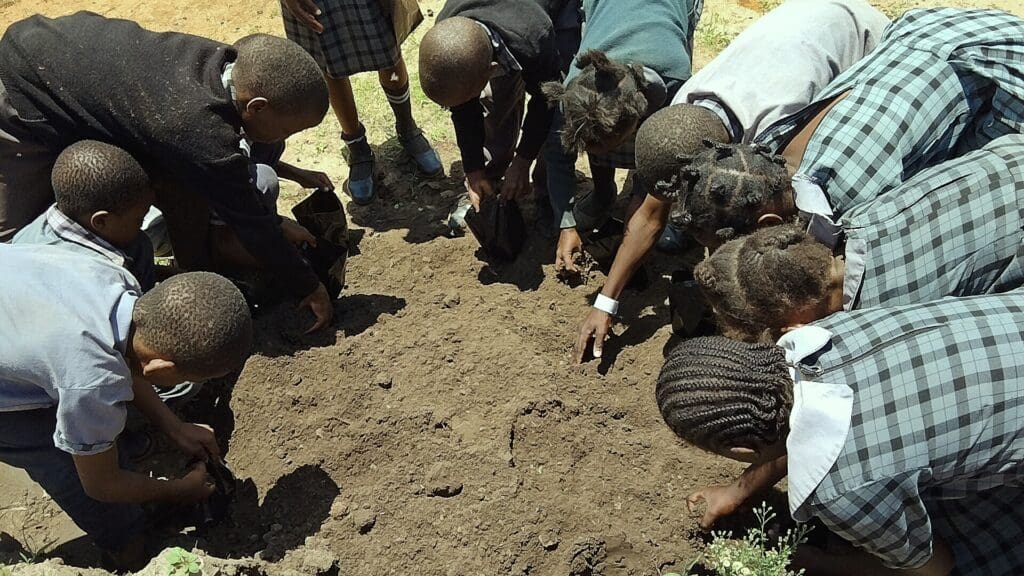
Project description
SAVE builds alternative livelihoods for communities affected by informal gold mining. Agroforestry, nurseries, water systems, vocational training and women-led enterprise work alongside livestock, beekeeping and savings groups to support a more stable local economy.
Explore the community context, existing work and development plans described by the project.
Project Overview
The SAVE initiative is a community-led development project designed to address the interconnected challenges of environmental degradation, economic instability, and social vulnerability in rural Zambia. Operating within a region experiencing increasing pressure from informal mining, deforestation, and climate-related stressors, the project aims to build resilient, self-sustaining communities through integrated systems development.
The project will serve as a demonstration hub for regenerative livelihoods, combining agroforestry, enterprise development, water systems, and vocational training to reduce dependency on extractive activities while restoring ecological balance.
Back to sections ↑Community Context
The project operates in Chikwanda Chiefdom, a rural region with an estimated population of approximately 146,000 people, characterized by:
- High dependence on agriculture, forestry, and informal mining
- Increasing youth involvement in artisanal gold mining
- Limited access to stable income and formal employment
- Growing environmental degradation and declining land productivity
The rise of informal gold mining has created:
- Income instability
- Environmental damage
- Increased vulnerability among youth and households
The project directly targets:
- Women
- Youth
- Smallholder farmers
- Mining-dependent households
Ecological & Environmental Context
Ecosystem Type: Forest–agricultural landscape
Key Environmental Challenges:
- Deforestation
- Soil degradation
- Water scarcity
- Biodiversity loss
- Flooding
- Land degradation from artisanal mining
Primary Restoration Needs:
- Reforestation with indigenous and fruit trees
- Soil regeneration through regenerative agriculture
- Water harvesting and conservation
- Rehabilitation of degraded and mined lands
Integrated Project Systems
The SAVE project is structured as a multi-system community platform, designed to restore ecosystems while building sustainable livelihoods.
Agroforestry & Regenerative Agriculture
- Diversified crop systems (vegetables, legumes, staple crops)
- Soil restoration through regenerative practices
- Improved food security and land productivity
Nursery & Seedling Production System
- Community tree nurseries
- Production of indigenous and fruit tree seedlings
- Income generation through seedling sales
- Support for regional reforestation efforts
Water Systems Infrastructure
- Rainwater harvesting
- Water storage for agriculture and households
- Improved resilience to drought and climate variability
Vocational Training & Community Learning Hub
- Skills training for youth and women
- Enterprise development and business skills
- Demonstration site for sustainable practices
Women-Led Enterprises
- Production of reusable sanitary products
- Income generation and improved health outcomes
- Increased financial independence for women
Livelihood Diversification Systems
- Small livestock production (e.g., poultry)
- Beekeeping (honey production) and fish farming
- Community savings and lending groups
- Local market development and aggregation
Alternative Economic Pathways for Mining Communities
- Support for transition away from unstable mining income
- Development of parallel income streams
- Supply of food and goods to mining areas
Three Pillars of Sustainability
Social Impact
- Skills training and youth empowerment
- Women’s economic independence
- Strengthened community leadership and organization
- Reduced vulnerability linked to unstable mining livelihoods
- Youth engagement in climate action through sports
Environmental Impact
- Reforestation and agroforestry systems
- Restoration of degraded and mined land
- Improved soil health and land productivity
- Sustainable land-use practices
- Community-led environmental stewardship
Economic Impact
- Diversified income streams through:
- Agriculture
- Nurseries
- Livestock
- Women-led enterprises
- Development of local markets and value chains
- Reduced reliance on extractive industries
- Long-term reinvestment into community systems
Role Within the Country Platform
The SAVE project is positioned to serve as:
- A demonstration site for integrated rural development
- A training hub for agroforestry, enterprise development, and sustainability
- A seedling production center supporting regional restoration
- A model for livelihood transition in mining-affected communities
The project contributes to broader national goals by aligning environmental restoration with economic development and community resilience.
Back to sections ↑Collaboration & Partnerships
The project will collaborate with:
- Local CSOs and traditional leadership structures
- Farmer groups, youth groups, and women’s associations
- Regional development and environmental initiatives
Key collaboration areas include:
- Agricultural training and extension
- Reforestation and restoration programs
- Market access and value chain development
- Knowledge exchange across projects
Key Needs & Opportunities
To achieve scale and impact, the project requires:
- Technical training in agroforestry and enterprise systems
- Access to quality seeds, tools, and greenhouse infrastructure
- Water system development
- Market access and business development support
- Capacity-building and knowledge exchange partnerships
Vision (5–10 Years)
The long-term vision is to reach over 15,000 people through replication and scale, establishing:
- A resilient local economy not dependent on extractive industries
- Restored ecosystems supporting sustainable livelihoods
- A regional model for integrated development in mining-affected communities
- A community-driven system that can be replicated across Zambia and beyond
Summary
The SAVE project represents a highly scalable, integrated approach to rural development in a region facing increasing environmental and economic pressure. By combining ecosystem restoration with livelihood diversification and community empowerment, the initiative aligns directly with Collaborative for Change’s model of building self-sustaining, regenerative community systems.
Back to sections ↑