
Project description
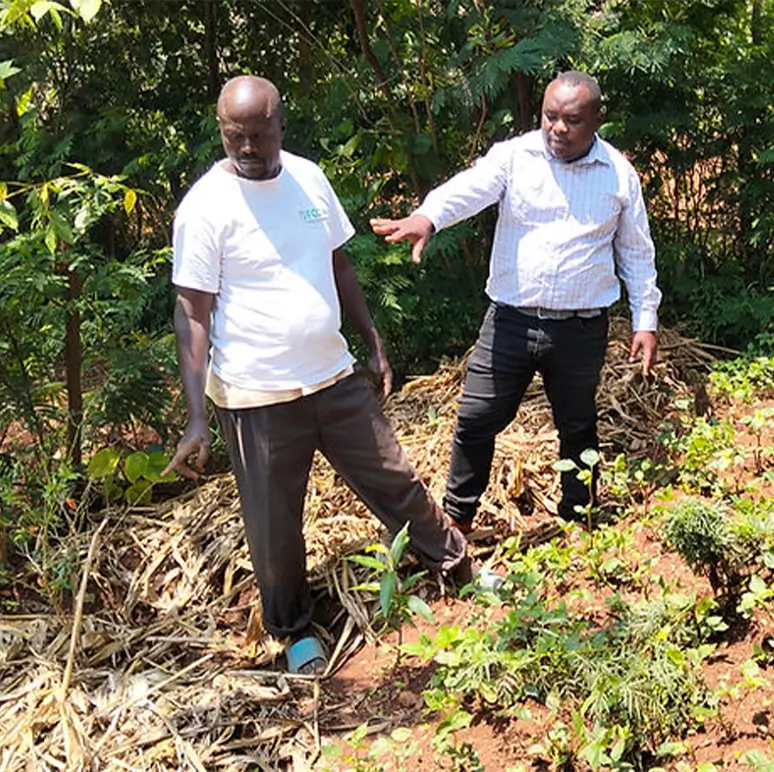
GFCCA proposes forest and farmland restoration across the Lake Victoria basin. Indigenous trees, regenerative agriculture, seed banks and watershed care support farmer training, food security and green livelihoods, with nature finance as a longer-term opportunity.
Explore the community context, existing work and development plans described by the project.
More project details
- Location
- Oyugis, Homa Bay County, Nyanza Region, Kenya
- Traditional Authority
- Luo Ker (Chief)
Project Overview
GFCCA proposes an integrated forest and agricultural restoration project centered in Oyugis, Homa Bay County, in Kenya's Nyanza region. The project combines agroforestry, farmer training, and watershed restoration with a longer-term goal of building a replicable, community-based model for climate resilience and rural livelihoods in the Lake Victoria basin.
Reported reach:
- The concept note identifies 5,000 farmers as the intended direct participants.
- Long-term ambition: reach 50,000 farmers over five to ten years.
Ecological Landscape
Primary ecosystem type: Agricultural landscape
Environmental conditions present: Deforestation, soil degradation, water scarcity, biodiversity loss, flooding, and overgrazing - the concept note indicates all listed conditions apply to the area.
Restoration infrastructure needs identified:
- Community tree nurseries
- Seed collection and storage facilities
- Demonstration plots
- Soil-testing equipment
- GPS/mobile data-collection systems
- Farmer training centers
- Restoration monitoring equipment
- GIS and remote-sensing capacity
- Carbon-MRV database
- Community restoration offices/field stations
Proposed programmatic structure (five flagship programmes):
- Forest & Indigenous Tree Restoration
- Farmer Agroforestry & Regenerative Agriculture
- Lake Victoria Watershed Restoration
- Climate-Smart Food Systems
- Carbon & Nature Finance
Regional Economic Context
Major economic activities: Agriculture, livestock, forestry, fishing, mining, tourism, local trade
Known natural resources: Forests, rivers/watersheds, fertile agricultural land, wildlife habitats, mineral resources (including gold)
Mining and mineral activity: Artisanal gold mining occurs in scattered pockets across the region. Environmental impacts associated with extraction include river contamination, deforestation, abandoned mining sites, soil degradation, and mercury/chemical contamination.
Back to sections ↑Core Project Systems
- Primary components: Forest-farmland agroforestry systems, seed banks, and central tree nurseries
- Additional activities: A "Global Nature First School" and regenerative agriculture learning centers
Three Pillars of Sustainability
Social
The project aims to build community well-being through continuous training for farmers, women, and youth in regenerative agriculture and green livelihoods; improved nutrition and healthcare access via higher household incomes; women's economic participation in agriculture and value-addition enterprises; youth pathways into agroforestry, restoration, and green entrepreneurship; and stronger community ownership through participatory planning and stewardship of restored land.
Environmental
Restoration is pursued through agroforestry and indigenous tree planting, watershed protection along the Lake Victoria basin, soil restoration via regenerative practices (composting, mulching, reduced tillage), biodiversity gains from diversified tree and crop cover, and climate mitigation/adaptation through carbon storage and drought resilience.
Financial
Economic resilience is built through improved agricultural productivity, diversified household income from tree and farm products, local value-addition and processing, small enterprise development for women and youth, job creation tied to restoration and training activities, and a longer-term carbon-finance revenue stream contingent on meeting applicable market requirements.
Back to sections ↑Role Within the Country Platform
GFCCA positions itself as a demonstration and training hub with potential relevance to Kenya's national development priorities:
- Producing tree seedlings for regional reforestation and distribution beyond the project site
- Serving as an agricultural training and demonstration hub for farmers, extension officers, and students
- Strengthening food security and rural livelihoods through diversified, climate-resilient farming
- Creating youth vocational and green-job pathways
- Generating restoration evidence (soil, biodiversity, carbon) for sharing with government and research partners
- Incorporating community health and nutrition awareness where partnerships allow
- Supporting national climate mitigation objectives through agroforestry and carbon-project readiness
- Documenting methodologies for replication in other counties
Potential Synergies With Other Initiatives
The project identifies collaboration opportunities across eight areas: seedling/seed distribution networks (county governments, cooperatives, schools); agricultural training and extension (county departments, universities, NGOs); shared water infrastructure and watershed management; renewable energy partnerships (solar irrigation, biogas); regional market linkages (cooperatives, processors, institutional buyers); research partnerships with universities (GFCCA reports already hosting student field attachments); youth and vocational training networks; and a proposed coordination/knowledge-sharing platform via stakeholder meetings and farmer field days.
Back to sections ↑Collaboration Needs
Priorities identified, in the order presented:
- Technical training and capacity building (highest priority)
- Quality seeds and tree seedlings
- Water infrastructure and watershed management
- Renewable energy and productive infrastructure
- Agricultural equipment and inputs
- Transportation and logistics
- Market and private-sector partnerships
- Research, monitoring, and technical expertise (including GIS/remote sensing and carbon-market practice)
- Youth and vocational training partnerships
- Financial and institutional partnerships (grants, blended finance, private investment)
Community Leadership & Governance
- Project Lead: Global Foundation for Climate Change Africa
- Local partner organizations: Kenya Forest Service, Creats International, NEMA Kenya, ACTS
- Community groups involved: Farmer groups, Bodaboda groups, local church groups, women's groups, youth groups
- Relevant training completed: Earth Awareness, Nursery Management