
Project description
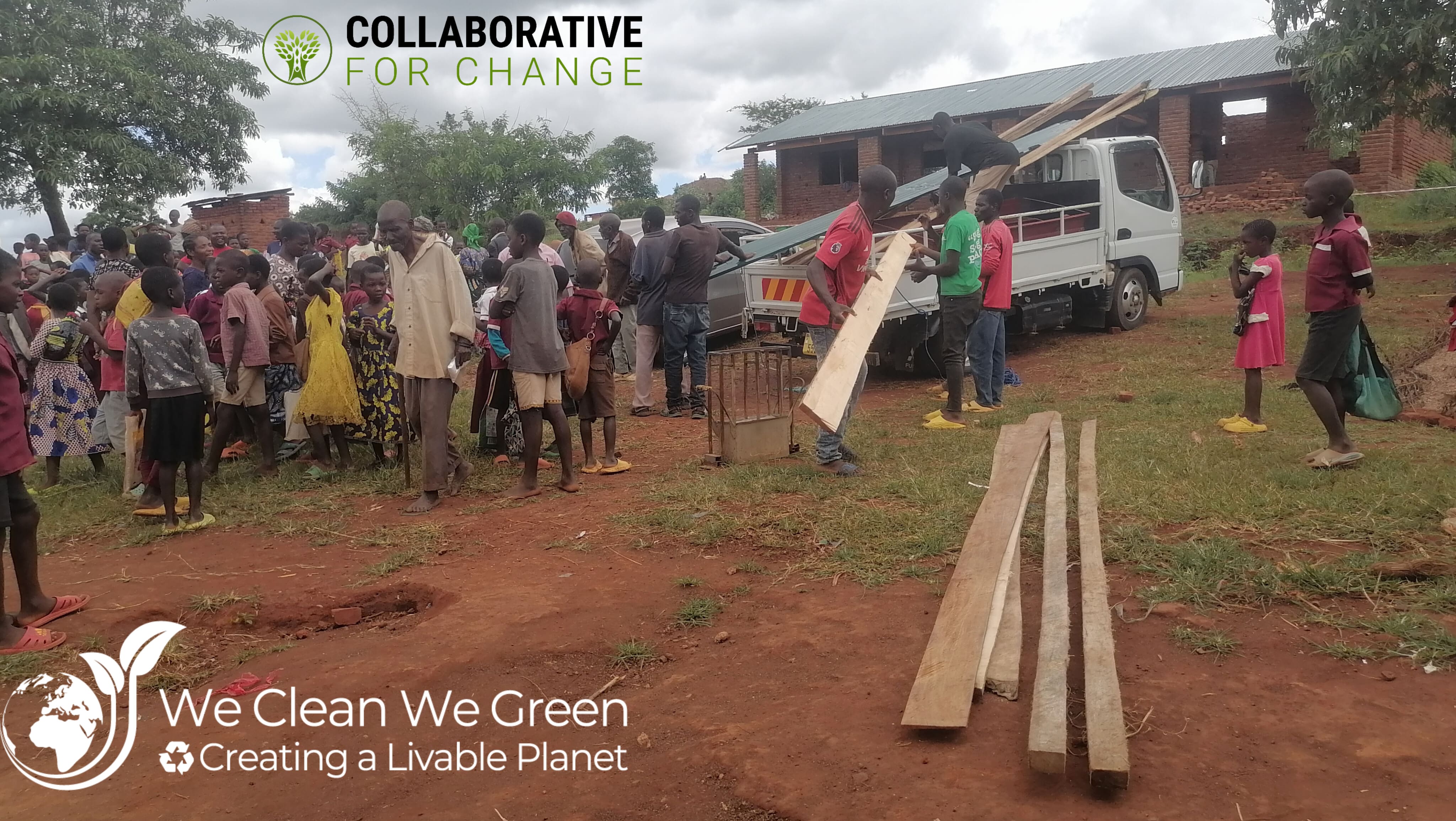
Recent classroom construction has improved access to learning, including for girls and young mothers. Nsonga’s next phase brings secondary education, safe boarding, digital skills, seed banking and native forest restoration together with women-led enterprise and farming livelihoods.
Explore the community context, existing work and development plans described by the project.
Project Overview
The Nsonga School Integrated Community Project is a community-led initiative in Malawi designed to address critical gaps in education, health infrastructure, livelihoods, and ecosystem restoration through a fully integrated, school-centered development model.
Led by Collaborative for Change in partnership with Pike Ng’oma and We Clean We Green, the project builds on recent successful interventions, including the construction of upper primary classrooms that have already improved school attendance and safety - particularly for girls.
The project now expands into a comprehensive community system integrating secondary education, women-led enterprise, agroforestry, seed systems, water infrastructure, and livelihood development.
Back to sections ↑Location and Leadership
- Country: Malawi
- Region: Central Region
- District: Lilongwe
- Community: Msambo (Nsonga)
- Project Lead: Pike Ng’oma
Supporting Organization: Collaborative for Change, Inc.
Community Authority: Chief Chimutu
Back to sections ↑Community Context
Nsonga is a rural agricultural community that has historically lacked access to essential infrastructure, particularly education and healthcare.
For over 20 years, the absence of Grade 7 and 8 classrooms forced students to travel long distances, resulting in:
- school dropouts
- increased safety risks, especially for girls
- limited educational progression
Recent interventions have already resulted in:
- improved attendance and retention
- return of girls to school, including young mothers
- introduction of evening learning programs
A major gap remains: there is no local secondary school, limiting long-term opportunities for youth.
- Estimated Community Size: ~750 households (2,000+ people)
- Direct Beneficiaries: students and ~700 surrounding households
- Projected Reach (5–10 years): a fully integrated community system supporting education, health, livelihoods, and restoration
Ecological and Economic Context
The region is a rural agricultural landscape with remaining native forest fragments.
Key environmental challenges include:
- soil degradation
- deforestation
- limited water infrastructure
- biodiversity loss
The local economy is based on:
- smallholder agriculture
- livestock
- informal trade
The project responds by integrating restoration, food systems, and enterprise development.
Back to sections ↑Project Components
Education Platform
- Completion of secondary school (Forms 1–4)
- Girls-only boarding facilities
- Computer lab and digital literacy programs
- Kitchens and training spaces
- Evening learning and expanded access to education
Women-Led Enterprise
- Banana fiber sanitary pad manufacturing
- Integration with school and health systems
- Income generation and menstrual health support
Agroforestry and Ecological Systems
- School and community food forests
- Forest park (ecology classroom and restoration site)
- Native forest restoration (~4 acres)
- Agroforestry expansion into surrounding households
Seed Bank and Nursery Systems
- Containerized, solar-powered seed bank
- Nursery for native trees, crops, and medicinal plants
- Regional seed distribution and restoration support
Water and Sanitation Systems
- Rainwater capture and storage systems
- Water treatment and distribution
- Compostable sanitation systems
Livestock and Agricultural Systems
- Household livestock (goats, poultry, pigs)
- Community livestock breeding farm
- Feed production systems (sunflower, soybeans)
- Training in sustainable livestock management
Additional Livelihood Systems
- Beekeeping and honey production
- Agricultural surplus for local markets
- Community-based enterprise systems
Beneficiaries and Impact
Direct Beneficiaries:
- Primary and secondary school students
- Women participating in enterprise systems
- Households engaged in agroforestry and livestock
Indirect Beneficiaries:
- Surrounding communities
- Local farmers and households
- Regional restoration networks
Sustainability Framework
Social Impact
- Access to primary and secondary education
- Increased safety and retention for girls
- Vocational training and youth development
- Community health and well-being
- Strengthened local governance and participation
Environmental Impact
- Agroforestry and food systems development
- Reforestation and native forest restoration
- Seed banking and nursery systems
- Water conservation and reuse
- Soil regeneration and biodiversity protection
Economic Impact
- Sanitary pad manufacturing (primary revenue stream)
- Agricultural surplus production
- Livestock systems and breeding
- Beekeeping and honey production
- Local market participation
Strategic Role and Scalability
The Nsonga project serves as a demonstration site for integrated, school-centered community development.
It is designed to:
- function as a regional seed bank and nursery hub
- support training and replication across Malawi
- integrate education with livelihoods and restoration
- expand into surrounding communities through distributed systems
Partnerships and Collaboration Needs
Key areas of support include:
- secondary school construction
- solar energy systems
- water infrastructure expansion
- health system integration (clinic, lab, natural pharmacy)
- vocational training systems
- technical and financial partners
Community Governance
The project is led by Pike Ng’oma in collaboration with:
- school leadership and learners
- women’s groups
- farming households (~300 households actively engaged)
Training alignment includes:
- Earth Awareness: Restoration Principles and Practices (Jill Wagner)
- Nursery Management Training (Jill Wagner)
Integration Within Broader Framework
This project integrates:
- education systems
- ecological restoration
- women-led enterprise
- water and health infrastructure
- livelihood development
It represents a scalable model for community-led, ecosystem-based development within Malawi and across similar regions.
Back to sections ↑